
Outlay for infra is also expected to see a significant increase in view of the government's Rs 111-trillion investment plan under the national infrastructure pipeline to develop social and economic infrastructure over five years.

Business chambers now inviting start-ups for membership.
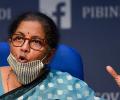
The central bank is the money manager of the government, and not a guarantor of any debt.
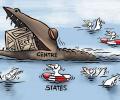
States may face a GST compensation shortfall of Rs 3 lakh crore in the next financial year, a situation that will force them to borrow more from the markets, says a report. The states may face a shortfall of Rs 2.7-3 lakh crore as Goods and Services Tax (GST) compensation from the Centre next fiscal. Out of that amount, the shortfall from cess collections will be at Rs 1.6-2 lakh crore, according to an Icra report released on Monday. In FY21, the states were facing a shortfall of Rs 1.1 lakh crore in GST compensation from the Centre but over 90 per cent of that amount has been cleared now.

'Hacking of an ID or an account will have the same impact on a user in a city and one in a small town.' 'Security is like a railroad, you create it to last for every customer.'
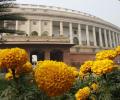
The states have unanimously pitched for sole administrative powers to carry out assessment, scrutiny and enforcement for entities up to an annual turnover of Rs 1.5 crore.

The Delhi high court on Friday held as "unconstitutional", the imposition of Integrated Goods and Services Tax (IGST) by the Centre on import of oxygen concentrators by individuals for personal use. A bench of Justices Rajiv Shakdher and Talwant Singh quashed the May 1 notification issued by the ministry of finance which says that such oxygen concentrators imported for personal use, irrespective of whether they are a gift or otherwise, will be charged with an IGST of 12 per cent. The court said the individuals will have to give an undertaking to the authorities that the oxygen concentrator is being imported for personal use and not commercial use.

It shows that states would require a compensation to the tune of at least Rs 1.67 trillion in 2024-25, as none of them would be able to achieve a 14 per cent growth every year.

Sebi keen to attract larger number of retail investors
The all-powerful GST Council on Friday decided to charge food delivery platforms such as Swiggy and Zomato a tax even as it extended concessional tax rates on certain COVID-19 drugs by three months till December 31. The Council, which comprises the Union finance minister and her state counterparts, decided to continue keeping petrol and diesel out of the GST purview as subsuming the current excise duty and VAT into one national rate would impact revenues. Briefing reporters on the decisions taken by the Council at a meeting here, Union Finance Minister Nirmala Sitharaman said GST has been exempted on muscular atrophy drugs like Zolgensma and Viltepso, which cost crores of rupees.
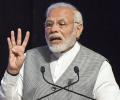
Rejecting criticism of jobless growth, he said if state after state is creating good number of jobs, how can the Centre be creating joblessness?
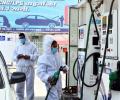
BJP leader Sushil Kumar Modi on Wednesday said it is not possible to bring petrol and diesel under the GST regime for the next eight to 10 years as it would cause an annual revenue loss of Rs 2 lakh crore to all states. Centre and states collectively collect over Rs 5 lakh crore tax on petroleum products, Modi told the Rajya Sabha while participating in a discussion on the Finance Bill 2021. The statement assumes significance in view of the rise in petrol price for the past over one year which even touched Rs 100 per litre in some states. In the first reduction in rates in over a year, petrol price on Wednesday was cut by 18 paise per litre and diesel by 17 paise a litre as international oil prices tumbled to the lowest since early February.

The RBI refuses to classify a cryptocurrency as an asset since it doesn't have future cash flow and its value is always fluctuating because of speculation. There is also no consumer protection, observes Tamal Bandyopadhyay, and hence the e-rupee trial run.
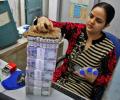
The 14th Finance Commission had recommended that states' share in the divisible tax pool be raised to 42 per cent, from 32 per cent earlier.
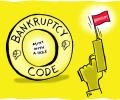
In a move to plug gaps in the Insolvency and Bankruptcy Code (IBC), the ministry of corporate affairs (MCA) has proposed robust norms against avoidance transactions, wrongful trading, and inordinate delays via changes to look-back period and fixed timelines for the tribunals to reject or approve plans, among other measures. The MCA has proposed that the IBC should provide the adjudicating authority with 30 days for approving or rejecting a resolution plan under Section 31. If a decision is not made on the resolution plan within that period, the adjudicating authority will record reasons in writing for the same, the ministry has proposed.

Finance Minister Arun Jaitley revealed that the government wanted to give Hasmukh Adhia a post-retirement role, but Dr Adhia said he would not work for a single day after November 30.

The heavy industries ministersaid that the proposal for the auto scrappage policy was ready and all stakeholders have provided inputs, therefore its announcement was likely very soon.

Finance Minister Nirmala Sitharaman presents her fourth Budget in Lok Sabha on Tuesday.
The net indirect tax collection in 2020-21 grew 12.3 per cent annually to Rs 10.71 lakh crore, thereby exceeding the target set in revised estimates, the Finance Ministry said on Tuesday. The mop-up through indirect taxes, which include GST, Customs and excise duties, was Rs 9.54 lakh crore in 2019-20. In the Revised Estimates (RE) for 2020-21, the target was set at Rs 9.89 lakh crore. Net collections from Goods and Services Tax (GST) stood at Rs 5.48 lakh crore during 2020-21, an eight per cent drop compared to Rs 5.99 lakh crore in the previous fiscal year.

Shadow of elections may overshadow political consensus at GST Council meetings.
The Centre managed to collect only Rs 990 crore as compensation cess in April 2020-21, almost one-ninth of the figure of Rs 8,874 crore mopped up a year ago. The subdued collection would further increase states' problems unless the GST Council, which meets next week, decides to borrow from the market.

For development finance institution to succeed now, the government must stand like a rock behind it and be patient.

These have to be passed in this session to meet the September 15 deadline for switching over to the new indirect tax regime, Jaitley said.

Thomas Isaac has been in and out of the national news in his role as Kerala's finance minister since 2018 for various path-breaking tax initiatives. But it is 2020 that he has become more prominent, principally in the GST council.

Sitharaman, who became the first full-time woman defence minister in the first tenure of the Bharatiya Janata Party-led National Democratic Alliance government -- will also head the Corporate Affairs ministry in the new cabinet.
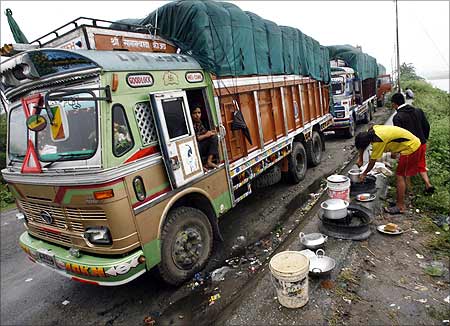
According to the draft, in the northeastern states the threshold is at Rs 500,000.
Retaining the GST rate assumes importance since states are under pressure to increase their revenues, hit hard by lockdown. Also, the Centre has not fully compensated states for their revenue losses on account of GST for 2019-20.

Chief Minister MK Stalin has shown that he is cut from a different cloth when it comes to embracing what is current, modern and absolutely necessary. Thus, even while retaining the spirit and content of the pan-Tamil, Dravidian socio-political and socio-economic ideology to the 't', his government has also acknowledged the need to accepting scientifically-proven facts in operational matters, says N Sathiya Moorthy.

Budget for women and children welfare increased from Rs 1,56,528 crores to Rs 1,84,632 crores for 2017-18
There is money to buy the central public sector enterprises, but buyers will need a firm assurance that the disvestment programme will keep environment issues front and centre of their corporate plans.
Manufacturing taxes, VAT will come down, assures Jaitley

Experts attribute the lower target to increased allocation under the credit guarantee scheme for small businesses. Out of the Rs 3.21 trillion worth loans sanctioned under the Pradhan Mantri Mudra Yojana (PMMY) in the last financial year, Rs 3.12 trillion were disbursed to entrepreneurs, according to official data.

The biggest headwind to the consumption story in FY23 is a sharp decline in government subsidies on food, fertiliser and fuel, and overall decline in revenue expenditure net of interest payments. This, analysts say, will adversely impact purchasing power of households at the lower end of the income pyramid, translating into lower spending on consumer goods and services.

More than 250,000 gram panchayats are yet to be connected through broadband.

According to Mitra, items such as foodgrain, vegetables, leather goods, footwear, cottage cheese, puffed and flattened rice, books and entertainment tax, among several others, should be in the zero-tax bracket.

Pulse oximeters, hand sanitisers, temperature check equipment and ambulances too will attract lower 5 per cent tax.

To make possible discretionary spending including capex and that on welfare, the government decided to borrow more than planned in FY21 -- Rs 12.7 trillion.

Budget-makers in North Block are looking to maintain this fiscal status quo, in spite of tax revenues nowhere close to where the government wants and in spite of possible higher expenditure commitments.
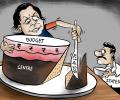
Every option before the finance minister comes with a price tag, observes T N Ninan.

PowerGrid was the top gainer in the Sensex pack, rallying over 4 per cent, followed by NTPC, UltraTech Cement, Tech Mahindra, Reliance Industries and IndusInd Bank.
